Outdoor Musical Activities for Seniors - Promoting Wellbeing, Connection and Dementia-Friendly Design
Designing meaningful outdoor experiences for older adults is increasingly recognized as essential to wellbeing, quality of life, and social connection. Outdoor musical activities for seniors, particularly within dementia-friendly gardens, offer a powerful way to combine physical activity, sensory stimulation, and emotional engagement in a safe, inclusive environment.
Dementia-Friendly Gardens - Sensory Spaces That Support Wellbeing
Spending time outdoors is vital for both physical and mental health at every stage of life. For older adults, especially those living with dementia, thoughtfully designed dementia-friendly gardens can become calm, familiar sanctuaries that encourage exploration, relaxation, and enjoyment.
Sensory gardens are designed to engage all five senses through the careful use of color, texture, scent, sound, and movement. This is particularly important for care home residents who may experience visual, hearing, or mobility impairments. Features such as:
- Clear, wheelchair-friendly pathways
- Comfortable seating and shaded rest points
- Raised planters and textured planting
- Gentle water features
- Courtyard gardens that feel enclosed, safe, and easy to navigate help residents feel confident and supported throughout the space.
These gardens can serve multiple purposes - from quiet reflection and socializing to reminiscence, rehabilitation, and horticultural therapy - while also offering valuable outdoor spaces for visitors, families, and care staff.
Music in the Garden - Adding Sound, Rhythm and Joy
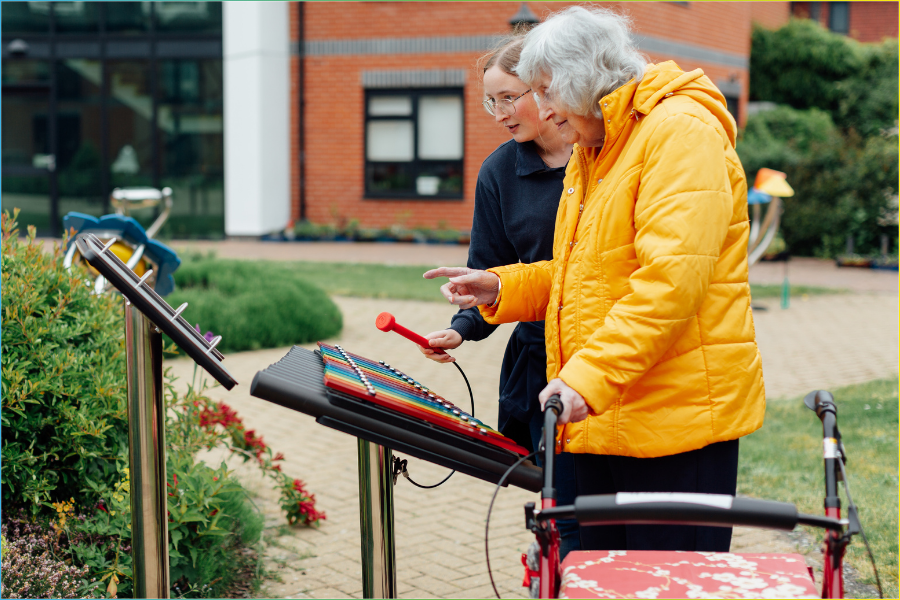
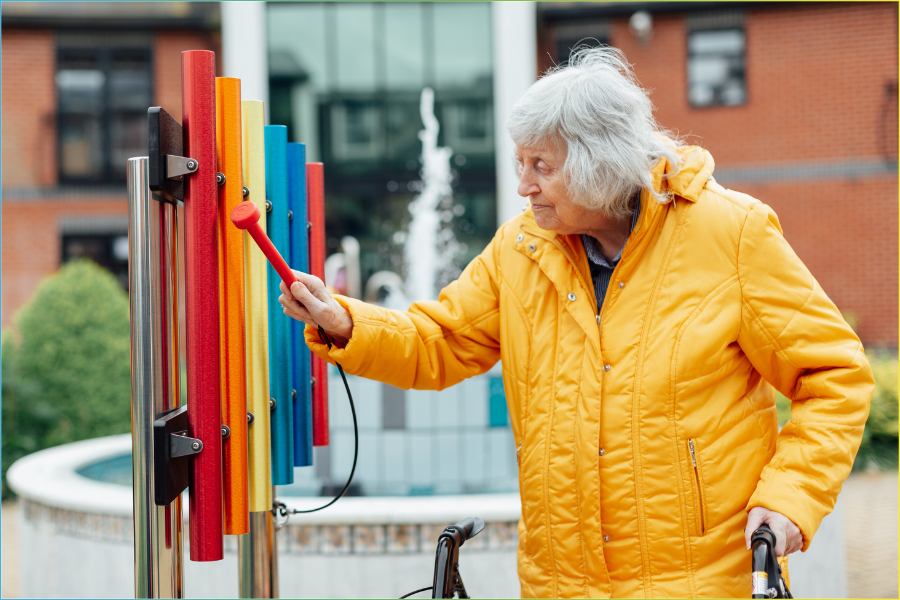
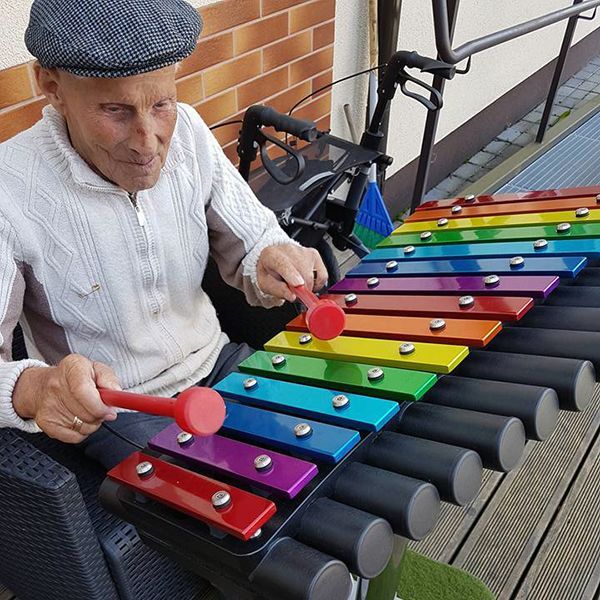
Music plays a vital role in emotional well-being, memory recall, and human connection. Integrating outdoor musical instruments into gardens transforms a traditional sensory space into an interactive musical sound garden.
A sound garden invites residents to explore rhythm, melody, and sound through simple, accessible instruments that encourage spontaneous play. These musical elements:
- Stimulate hearing, touch, and movement
- Encourage time outdoors
- Create moments of joy, curiosity, and shared experience
- Appeal to residents regardless of musical background or ability
Whether installed as focal points in a courtyard garden or arranged as a musical trail along a garden pathway, outdoor instruments offer residents a fresh and engaging way to experience their surroundings.
Therapeutic Benefits of Music in Dementia Care Settings
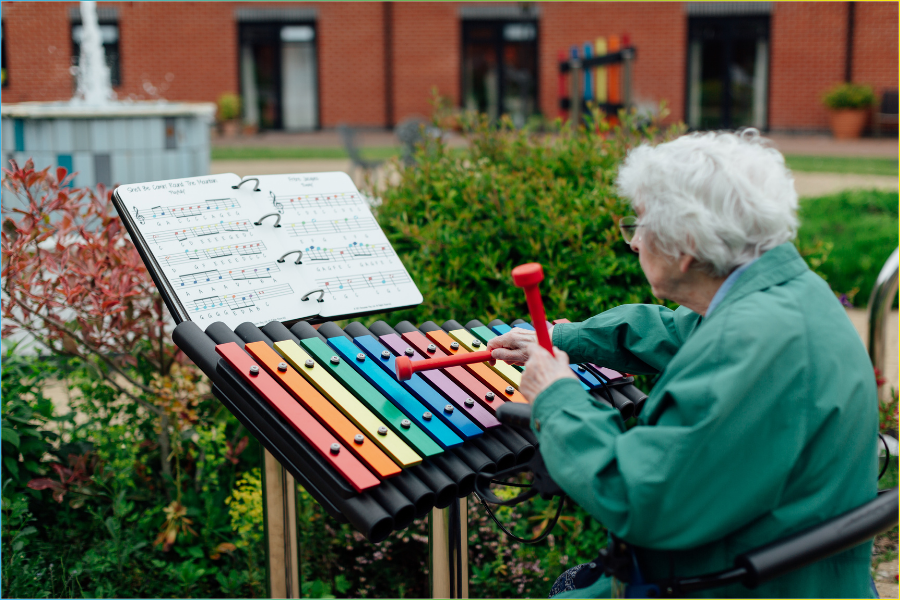
Extensive research supports the therapeutic benefits of music for people living with dementia. Musical engagement is known to help:
- Reduce agitation, anxiety, and stress
- Improve mood and emotional expression
- Encourage social interaction
- Support motor skills and coordination
Playing outdoor musical instruments can be both stimulating and calming. The physical action of playing supports movement and coordination, while the harmonious sounds help create a soothing outdoor soundscape.
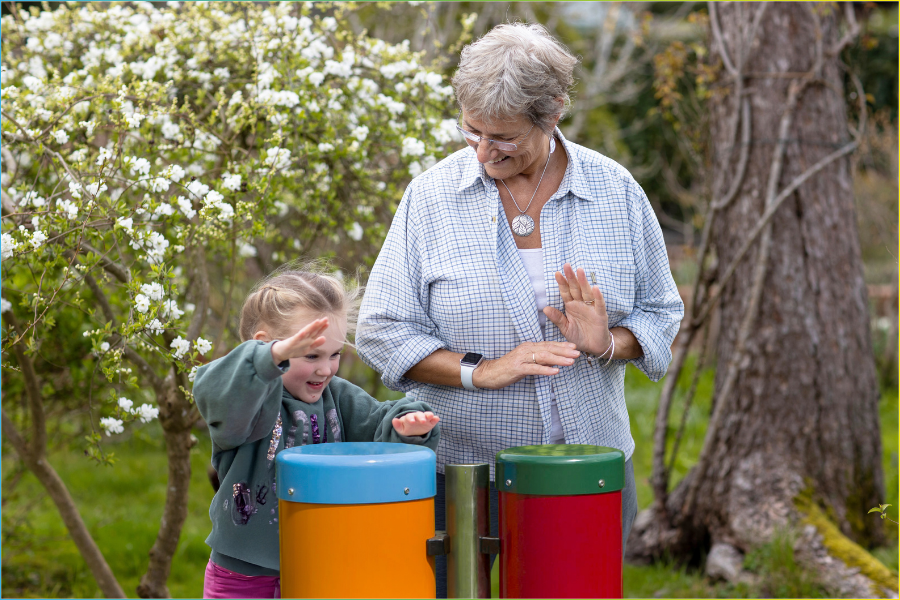
Shared music-making also provides opportunities for meaningful connection - whether between residents and carers, therapists, visiting family members, or across generations.
Music-Making for Residents, Carers and Visitors
Engaging in outdoor activities is essential for creating vibrant, welcoming care environments. Outdoor musical activities help relieve boredom, encourage participation, and bring energy into everyday routines.
Music is a universal language. It transcends cultural background, cognitive ability, and verbal communication, making it particularly effective in care settings. Playing instruments outdoors can:
- Improve concentration and focus
- Promote mobility and hand-eye coordination
- Support relaxation and stress reduction
- Encourage self-expression and creativity
- Enhance social interaction and shared experiences
Musical spaces naturally draw people together. In sound gardens and music trails, residents and visitors often interact spontaneously, comparing sounds, materials, and rhythms.
Designing Harmonious Sound Gardens and Music Trails
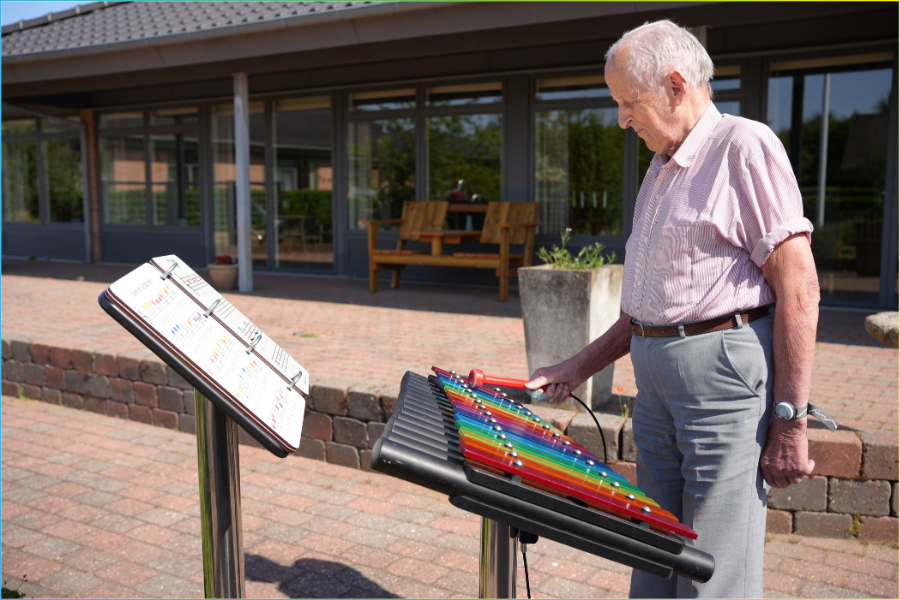
The materials and tuning of outdoor musical instruments play an important role in the sensory experience. For example:
- Timber instruments produce warm, low-pitched, natural tones
- Metal instruments create bright, clear notes with strong resonance
Instruments tuned to the pentatonic scale ensure all notes harmonize, making musical play intuitive and frustration-free. This encourages even non-musicians to participate confidently, creating new melodies every time.
A sound garden or outdoor music trail may feature sculptural instruments positioned along looping pathways, inviting residents to move through the space at their own pace. When combined with seating, planting, and visual interest, these environments become far more than green spaces - they are therapeutic, interactive outdoor experiences.
Encouraging Outdoor Living Through Music
Well-designed outdoor musical spaces can motivate residents to spend more time outdoors, supporting physical health, emotional well-being, and social connection. Whether incorporated into courtyard gardens, sensory gardens, or larger landscaped grounds, outdoor musical instruments provide a meaningful, joyful reason to step outside and engage with the world.
The video below is a collection of short clips from numerous care homes and elder centers, where outdoor musical instruments have proven both beneficial and fun.
{}
Further information on the positive effects of music and the great outdoors can be found within our Insights as well as our White Papers on various music, play, and health-related topics.
By clicking "Subscribe", you confirm that you have read and accepted our Terms and Conditions, Privacy Policy and Cookie Policy.