Music in Open‑Ended Play - Making Play Limitless for Children
Music plays an important role in supporting open‑ended play, giving children the freedom to explore, create, and express themselves without limitation. Open‑ended play is vital to a child’s development, enabling learning in a truly holistic and child‑led way through active play and exploration, with no instruction or direction.
With no predetermined limitations and no fixed outcomes, open‑ended play allows children to follow their imagination and let play develop in any direction their creativity takes them. There is no right or wrong way to play - no rules, no expectations, and no pressure to produce a finished result.
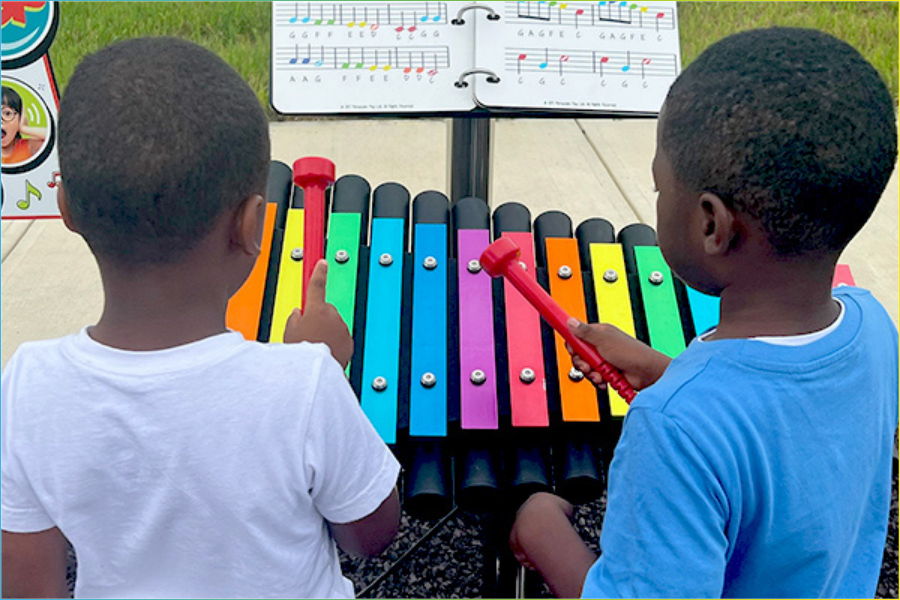
The Benefits of Open‑Ended Play for Children
The benefits of children engaging in open‑ended play are wide‑ranging. Allowing opportunities for self‑directed exploration and repetition gives children the chance to experiment, revisit ideas, and consolidate their learning over time.
Open‑ended resources support creativity, whereas resources designed for a specific purpose tend to lead to fixed outcomes. For example, a large cardboard box might become a car, a shop, or a spaceship, while a puzzle will always remain a puzzle. While both have educational value, open‑ended resources offer far greater flexibility.
Creative, open‑ended play supports key cognitive and developmental skills, including:
- working memory
- cognitive flexibility
- self‑regulation
- self‑discovery
Children can focus on creating based on intrinsic motivation, allowing play to evolve as their thinking develops. Open‑ended play aligns closely with the Early Years Foundation Stage (EYFS), giving practitioners opportunities to observe a wide range of skills, such as role‑play, problem‑solving, and mathematical exploration.
These experiences also link directly to the Characteristics of Effective Learning, enabling children to:
- play and explore
- be active in their learning
- create and think critically
How Music Encourages Open‑Ended Play
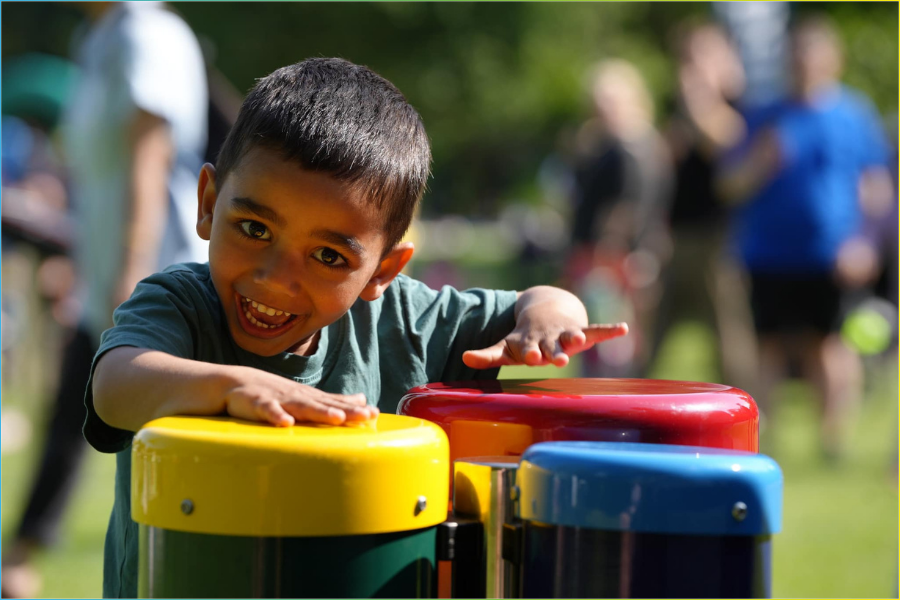
Unstructured musical play offers powerful opportunities for children to express thoughts, ideas, and feelings. Improvisation is a particularly effective way of encouraging open‑ended play through music.
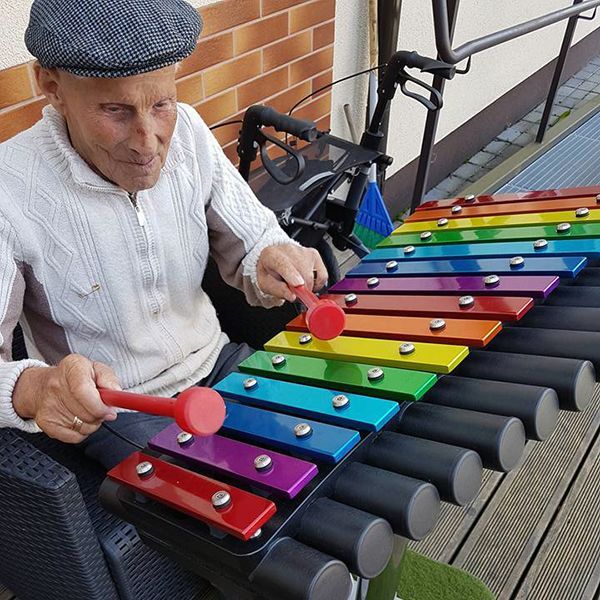
Outdoor musical instruments in playgrounds and public spaces provide a safe, accessible environment where children can explore sound freely, express their creativity, and experiment without judgment.
Open‑ended musical play differs from teacher‑led music sessions. It is:
- child‑initiated
- internally motivated
- free from assessment or comparison
Many confidence issues around music stem from the fear of “getting it wrong”. Instruments tuned to the pentatonic scale remove this barrier entirely. As the notes always sound harmonious, children can:
- play freely without discord
- explore musical ideas independently
- build confidence through success
In modern life, children are surrounded by music from screens, toys, and digital devices, much of which is unchosen. This often makes them passive listeners rather than active music‑makers. Given the opportunity, children are natural composers, and improvisation supports creativity, originality, and confident self‑expression through sound.
Open‑Ended Play Environments for Musical Exploration
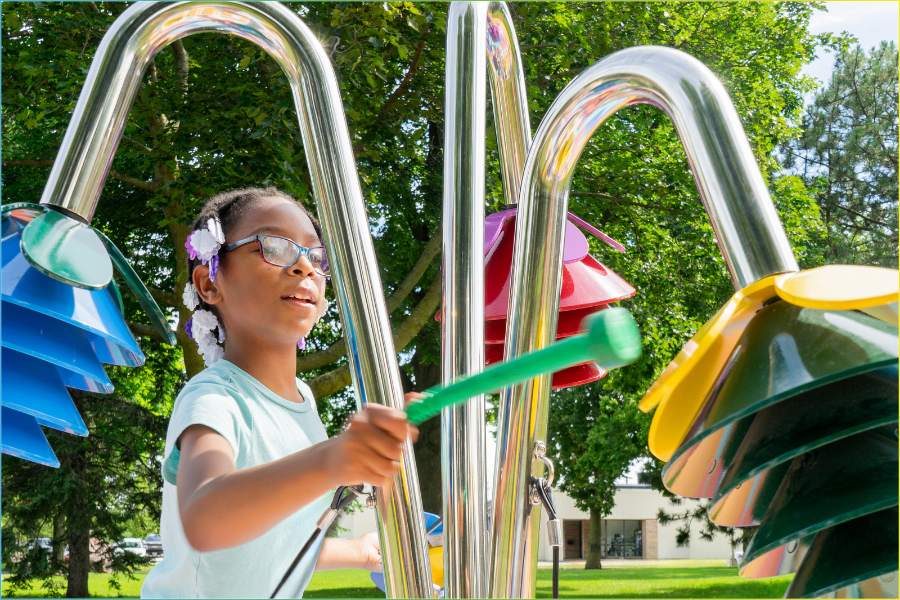
Children develop emotionally, socially, creatively, and cognitively through spontaneous music and movement. Their musical play often reflects what they are thinking or feeling, even before they have the language to express it.
Access to supportive environments is essential. Children need time and space to enjoy musical exploration without interruption. Permanently installed outdoor musical instruments allow children to:
- revisit and refine musical ideas
- repeat learning experiences by choice
- experiment with pitch, tempo, and dynamics
Because these instruments do not need to be packed away, children can return to their compositions and improve them over time, supporting deeper learning and sustained engagement.
Playgrounds and outdoor learning environments are ideal for open‑ended musical play. They encourage interaction, inclusion, and sensory exploration, supporting children of all backgrounds and abilities.
Encouraging Open‑Ended Play Through Music
Open‑ended play strips away rigid rules, expectations, and time limits, empowering children to think independently and creatively. These experiences help children develop transferable skills that support both academic learning and real‑world problem‑solving.
Adults play an important supporting role. Open‑ended musical play is best encouraged when adults:
- ask open‑ended questions
- avoid directing or correcting play
- follow the child’s lead
By allowing learning environments, resources, and adult interactions to remain open‑ended, musical play stays dynamic, inclusive, and enjoyable - helping children build confidence and creativity through freedom of expression.
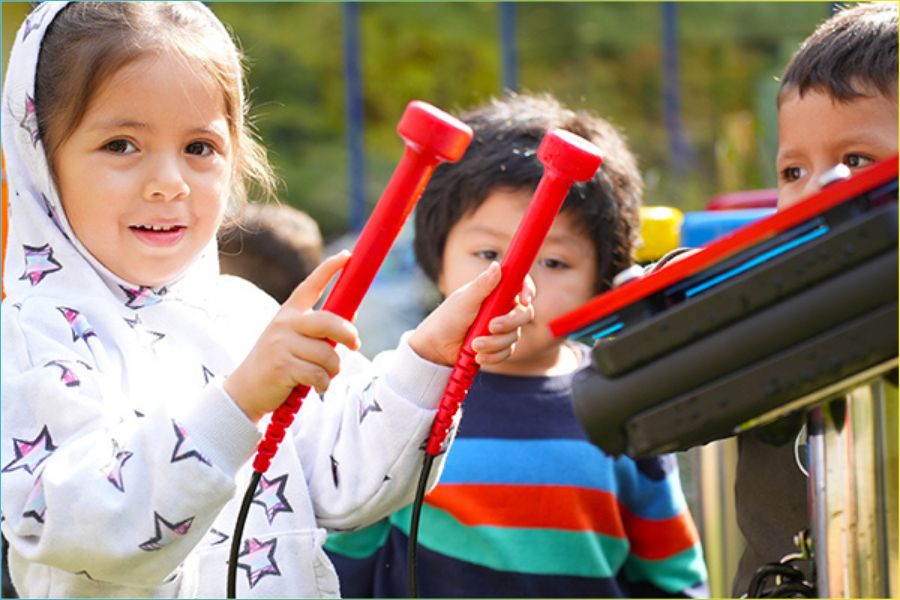
Further information on the positive effects of music and the great outdoors can be found within our Insights as well as our White Papers on various music, play, and health-related topics.
By clicking "Subscribe", you confirm that you have read and accepted our Terms and Conditions, Privacy Policy and Cookie Policy.